


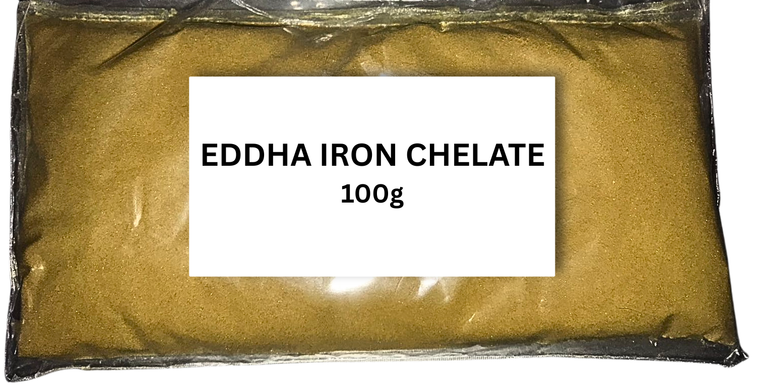
EDDHA Iron Chelate (100 grams)
MyAquaponics
R55.00
(No reviews yet)

Write a Review
MyAquaponics
EDDHA Iron Chelate (100 grams)
EDDHA Iron Chelate
What is EDDHA Iron Chelate?
EDDHA (Ethylenediamine-N,N'-bis(2-hydroxyphenylacetic acid)) Iron Chelate is a premium iron supplement specifically designed to correct and prevent iron chlorosis in plants. It represents the most stable and effective form of chelated iron available, particularly excelling in challenging high-pH conditions where other iron chelates become ineffective.
In EDDHA, iron molecules are bound within a protective organic cage structure that keeps the iron in a soluble, plant-available form even in alkaline conditions. This chelation process prevents the iron from oxidizing or binding with other elements in the growing medium, ensuring plants can readily absorb this essential micronutrient.
Benefits for Aquaponics Systems
Addressing Iron Deficiency
In aquaponics systems, fish waste undergoes bacterial breakdown to produce nitrates that fuel plant growth. However, despite abundant nitrogen, aquaponic systems frequently develop deficiencies in critical nutrients—particularly potassium, calcium, and iron. EDDHA Iron Chelate effectively corrects chlorosis (the characteristic yellowing of leaves) caused by iron deficiency, restoring healthy green foliage and optimal photosynthesis.
Superior pH Stability
EDDHA Iron Chelate works exceptionally well in pH ranges from 4.0 to 9.0, making it the ideal choice for aquaponic systems that often operate at higher pH levels (7.0-8.5) due to the buffering effects of fish waste and mineralization processes. Unlike DTPA (effective pH 5.5-7.5) or EDTA (effective pH 4.0-6.5), EDDHA remains stable and bioavailable even in alkaline conditions, ensuring consistent iron delivery regardless of pH fluctuations.
System-Safe Formulation
EDDHA is completely safe for fish and beneficial bacteria when used at recommended dosages. The chelate does not interfere with the nitrogen cycle or harm the delicate biological balance essential to aquaponic system health.
Long-Lasting Effectiveness
Due to its exceptional stability, EDDHA provides prolonged iron availability, reducing the frequency of supplementation compared to other chelates. This translates to lower maintenance requirements and more consistent plant nutrition over time.
Recognizing Iron Deficiency
Before supplementing with EDDHA, confirm that iron deficiency is the actual problem:
- Visual symptoms: Interveinal chlorosis (yellowing between leaf veins) primarily affecting new growth and young leaves, while veins remain green
- Check nitrate levels: Low nitrogen can also cause leaf yellowing, so verify adequate nitrate levels (40-80 ppm) first
- pH verification: Test system pH to ensure proper chelate selection
- Progressive symptoms: Advanced deficiency leads to completely bleached new growth and stunted plant development
Directions for Use
Foliar Application (Aquaponics & Hydroponics - Recommended):
- Dissolve 3-5g in 10ℓ water
- Spray leaf surfaces thoroughly, covering both upper and lower leaf surfaces
- Apply during early morning or late evening to prevent leaf burn
- Repeat at weekly intervals until chlorosis disappears and healthy green growth returns
- Reduce to monthly maintenance applications once deficiency is corrected
Direct Water Application (Aquaponics):
- Dissolve 1-2g per 100ℓ of system water
- Add solution to a high-flow area for rapid distribution
- Monitor fish behaviour during and after application
- Repeat every 3-4 weeks as needed based on plant response
Soil/Growing Media Application:
- Dissolve 5g in 1ℓ water
- Apply nutrient solution evenly around the root zone of affected plants
- Repeat every four weeks or as plant response indicates
Pot Plants & Container Gardens:
- Dissolve 1g in 10ℓ water
- Water plants monthly as a preventive measure
- Increase concentration for acute deficiency symptoms
Additional Applications Beyond Aquaponics
Hydroponics Systems
EDDHA excels in recirculating hydroponic systems, particularly those using hard water or operating at higher pH levels. It prevents iron precipitation and ensures consistent micronutrient availability.
Alkaline Soil Remediation
For gardens and agricultural applications with high-pH soils (7.5+), EDDHA is often the only effective iron supplement. It remains stable in calcareous soils where other chelates fail.
Ornamental Plants & Turf
Acid-loving ornamentals (azaleas, gardenias, blueberries) and turfgrass growing in alkaline conditions benefit significantly from EDDHA supplementation.
Commercial Agriculture
Used extensively in vineyards, citrus groves, and fruit tree orchards where alkaline soils commonly create iron deficiency challenges.
Storage and Handling
- KEEP BAG TIGHTLY CLOSED WHEN NOT IN USE
- Store in a cool, dry location away from direct sunlight
- Keep away from moisture to prevent clumping and degradation
- Shelf life: 2-3 years when properly stored
- Avoid contamination with other fertilizers or chemicals
Key Advantages of EDDHA vs. Other Iron Chelates
| Feature | EDDHA | DTPA | EDTA |
|---|---|---|---|
| Effective pH Range | 4.0-9.0 | 5.5-7.5 | 4.0-6.5 |
| Stability | Excellent | Good | Moderate |
| Cost | Higher | Moderate | Lower |
| Best Application | High pH systems | Neutral pH | Acidic conditions |
Package Size
- Available in 100g packets
- Sufficient for multiple applications in home aquaponic systems
- Larger quantities available for commercial operations
Pro Tip: For optimal results in aquaponics, combine foliar and water applications during initial treatment, then maintain with monthly foliar sprays. Always test and adjust pH levels if consistently outside the ideal range for your specific system requirements.


